
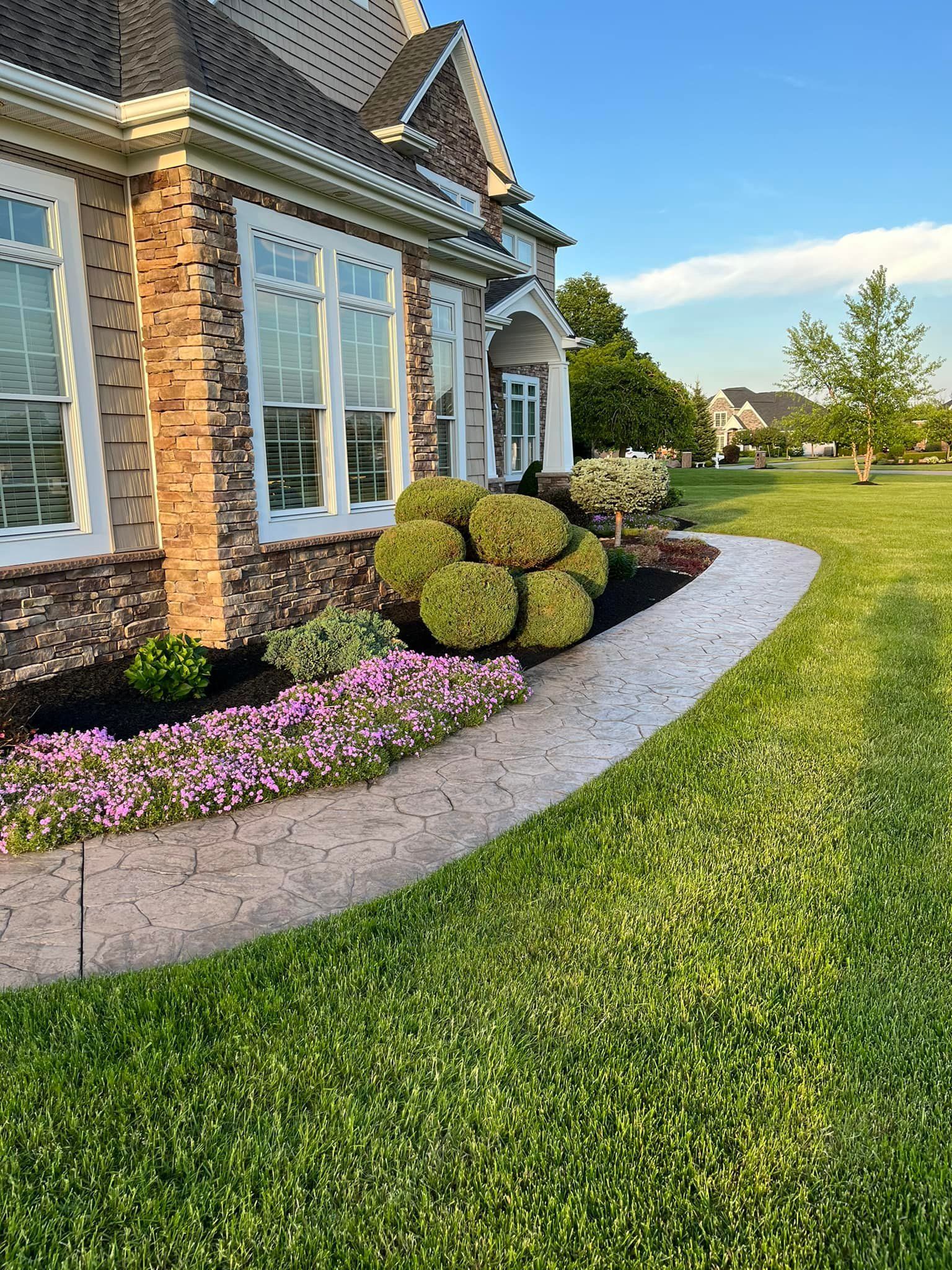
Properties That Function Better After the Work
Residential landscaping in Buffalo for homeowners addressing poor drainage, outdated plantings, or unusable yard areas
Yards that slope toward foundations, plantings that died over the previous winter, or outdoor areas too wet to use after rain point to landscaping that needs functional upgrades. Full-service residential landscaping in Buffalo, New York, covers new installations, replacements for failed elements, and ongoing maintenance that keeps outdoor spaces usable. Jensen's Landscaping & Lawn Care tailors work to property size, architectural style, and what homeowners actually need their yards to do—whether that's managing water, creating privacy, or providing spaces for outdoor activity.
Work combines design decisions, plant installations, and structural additions like retaining walls or drainage corrections. Each element serves a specific function: grading changes redirect water away from basements, plant selections match sun and moisture conditions in each zone, and hardscaping creates stable surfaces where grass won't survive foot traffic. Buffalo's climate requires plant choices that tolerate winter lows below zero and late spring freezes that damage cold-sensitive species.
Arrange a property evaluation to identify which upgrades address your specific concerns.
The Difference Between Decorative and Functional Work
Functional landscaping solves observable problems: water pooling near the foundation, mud tracked indoors from a frequently used path, or dead zones where grass won't grow due to shade or compaction. Solutions involve changing how water moves, installing surfaces where traffic patterns show wear, or selecting shade-tolerant groundcovers for areas where turf fails repeatedly. Decorative elements like flower beds or ornamental trees layer onto the functional framework once drainage and usability problems are corrected.
After work is complete, you'll notice water flowing away from structures instead of pooling, pathways that stay solid underfoot regardless of weather, and plantings that return each spring without replacement. The yard becomes usable immediately after rainstorms instead of requiring days to dry. Outdoor spaces accommodate the activities you actually do—whether that's gardening, entertaining, or simply maintaining a clean appearance—without constant intervention to fix recurring problems.
Landscaping work can happen in phases based on budget and priority. Many homeowners address drainage and structural issues first, then add or upgrade plantings in subsequent seasons once the underlying problems are resolved. This approach prevents wasting resources on plants installed in locations where water issues or poor soil will kill them within a year. Other projects focus entirely on refreshing outdated plantings without any structural changes, depending on what the property actually needs.
Questions Before Starting Your Project
Homeowners planning landscaping work in Buffalo frequently ask these questions during initial consultations.
What does full-service landscaping include?
Full-service work includes everything from initial site assessment and design through installation of plants, hardscaping, drainage solutions, and any ongoing maintenance needed to establish new plantings.
How do you determine what a property actually needs?
Assessment involves observing where water collects, which areas stay wet or dry, where current plantings have failed, and how the property is used—problems reveal themselves through visible evidence like standing water, dead plants, or worn paths through turf.
When is the best time to schedule landscaping work in Buffalo?
Installation work happens from late April through October, but drainage corrections and hardscaping can occur earlier or later since they don't depend on planting windows—design and planning happen year-round.
Why do some plants survive winters while others die back?
Cold hardiness varies by species—plants rated for USDA Zone 5 or lower survive Buffalo winters reliably, while marginally hardy plants may survive mild winters but die during cold snaps below -10°F.
What's the difference between new installation and upgrading existing landscaping?
New installation starts with bare or minimally landscaped areas, while upgrades involve removing failed elements, correcting underlying issues that caused failures, and replacing outdated or dead plantings with species better suited to current conditions.
Jensen's Landscaping & Lawn Care works with homeowners across Buffalo to plan and install landscaping that improves both function and appearance. Schedule a consultation to review what your property needs and how work can be phased to match your timeline.