
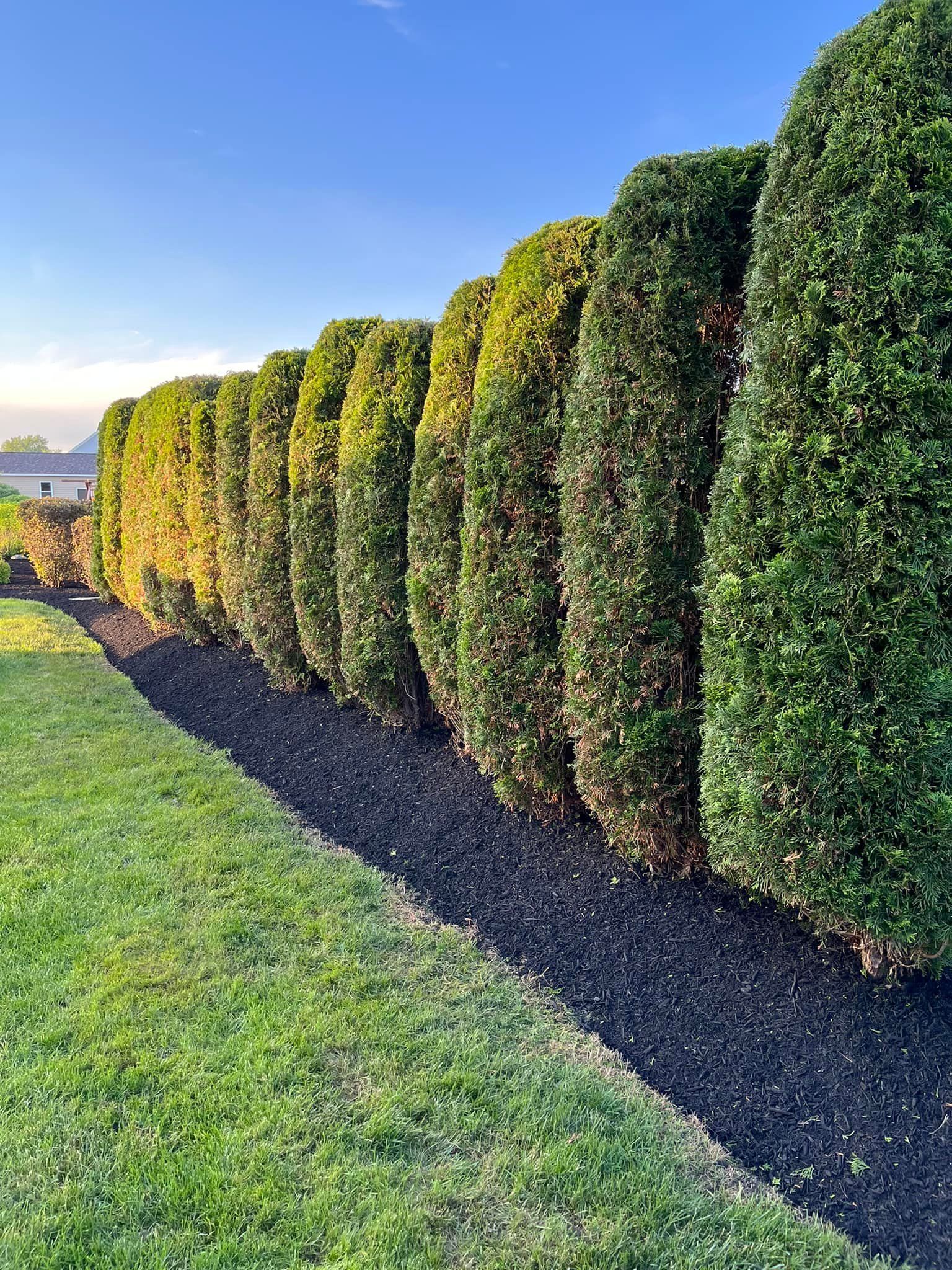
Beds That Hold Moisture and Block Weeds
Mulching and bed maintenance in Buffalo for landscaped areas that need consistent appearance and reduced watering demands
Mulch breaks down over time through decomposition and displacement, thinning to the point where soil shows through and weed seeds germinate in the gaps. This service applies fresh mulch layers to garden beds, creates or redefines bed edges that prevent grass from creeping into planted areas, and removes debris or volunteer growth that competes with intentional plantings. You need bed maintenance when mulch no longer covers soil completely, when edges have eroded or disappeared, or when beds look neglected despite healthy plants.
Jensen's Landscaping & Lawn Care provides mulching and bed maintenance across Buffalo, New York for residential and commercial properties where landscaped areas contribute to curb appeal or property value. The process starts with clearing existing beds of leaves and weeds, redefining edges using mechanical edgers or manual trenching, then applying mulch to a depth that suppresses weed germination while allowing water to penetrate to plant roots. Proper mulch depth—typically two to three inches—insulates roots during temperature swings and reduces moisture loss during dry periods common in Buffalo summers.
Request seasonal refresh services to restore bed appearance before growing season begins or after fall cleanup prepares properties for winter.
Why Bed Edging and Mulch Depth Matter
Defined bed edges create a physical barrier that lawn mowers follow, which prevents grass from spreading into beds and eliminates the need for string trimming along every planting. Mulch applied at consistent depth blocks light from reaching weed seeds in the soil below, which stops germination before weeds establish roots that compete for water and nutrients your intentional plants need.
After bed maintenance, you'll see clean lines separating lawn from planted areas, uniform mulch color without bare spots or thin patches, and reduced weed pressure that means less hand-pulling throughout the growing season. Beds look intentional rather than overgrown, and plants show better growth because they're not competing with turf grass or opportunistic weeds for resources.
Mulch selection depends on your preferences and bed use—shredded hardwood breaks down slower than pine bark, dyed mulch holds color longer but costs more, and natural options blend into woodland settings better than processed products. Bed maintenance works as an add-on to regular mowing schedules or as a standalone seasonal service timed to spring planting or fall preparation.
Questions Before Starting Your Project
Here are details about mulching processes and what bed maintenance includes.
What does bed edging actually do?
Edging cuts a narrow trench between lawn and bed that stops grass rhizomes from spreading into planted areas and creates a mowing guide that keeps equipment from damaging plants or scattering mulch.
How often should mulch be replenished?
Most beds need fresh mulch annually because existing material decomposes, settles, and washes or blows away, reducing depth below the two to three inches needed for effective weed suppression and moisture retention.
What's included in bed maintenance beyond mulch?
Maintenance includes removing leaves and debris, pulling visible weeds before they seed, redefining edges that have eroded, and refreshing mulch to consistent depth across the entire bed area.
Why does mulch help with watering?
Mulch layers reduce evaporation from soil surfaces and moderate temperature swings that stress plant roots, which means soil stays moist longer between waterings and plants handle Buffalo's summer heat with less irrigation.
When should beds be mulched in Buffalo?
Spring mulching before plants leaf out fully makes application easier and suppresses the first flush of annual weeds, while fall mulching protects roots heading into winter and gives beds a finished look during dormant months.
Jensen's Landscaping & Lawn Care assesses bed conditions and recommends mulch types based on your planting goals and maintenance preferences. Call (716) 696-0041 to schedule bed refresh services that improve both function and appearance.