
Backyards Designed for Actual Use
Outdoor living spaces in Buffalo for properties where yards sit unused due to poor surfaces, lack of seating areas, or layouts that don't support entertaining
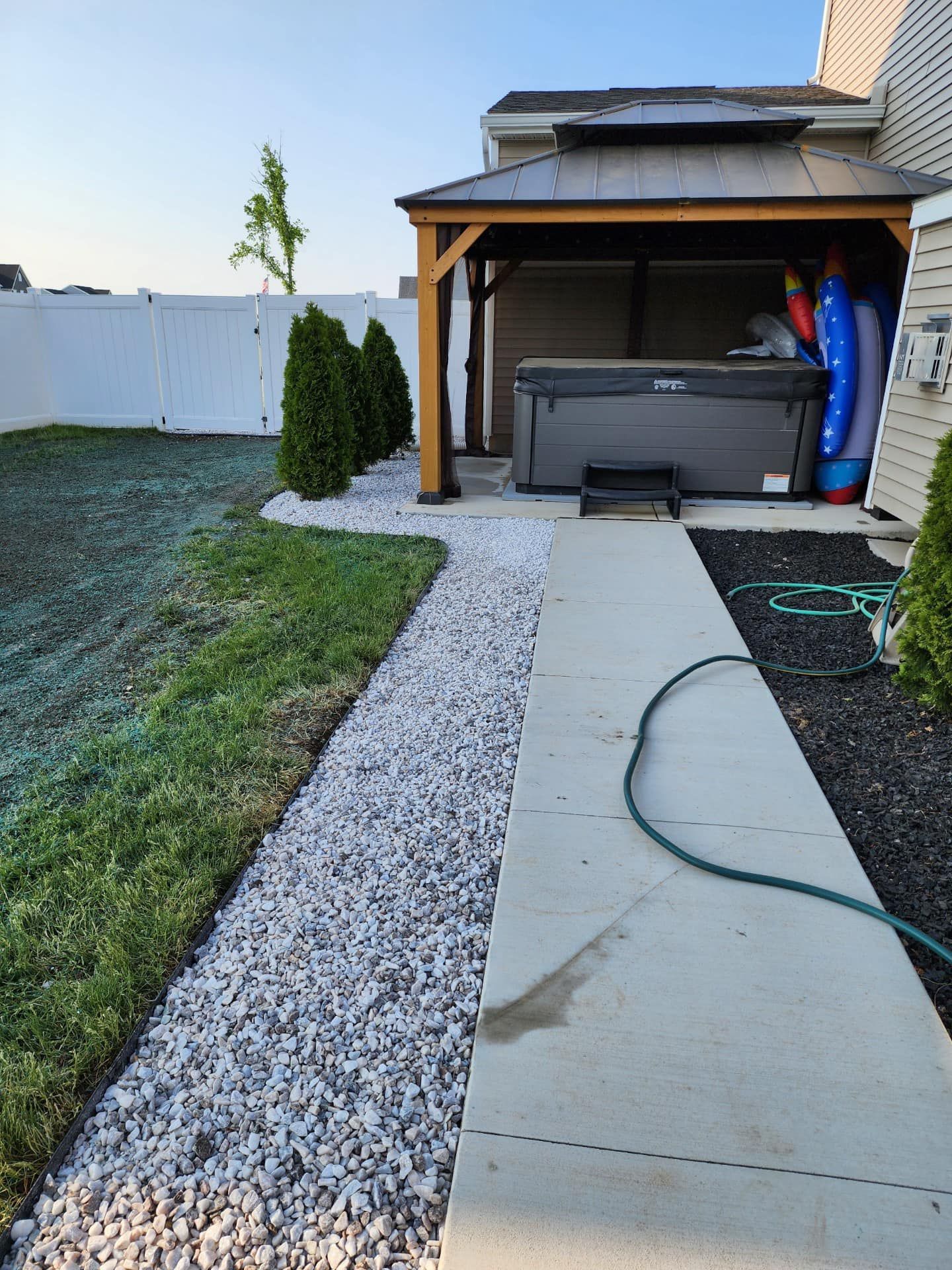
Outdoor living space design and construction in Buffalo, New York, creates patios, seating areas, and functional backyard environments that integrate with existing landscape features. Jensen's Landscaping & Lawn Care focuses on usability, comfort, and long-term durability in structures that handle Western New York freeze-thaw cycles without heaving, cracking, or requiring frequent repairs. Projects range from simple gravel patios with defined seating to multi-level stone installations with built-in fire features and retaining walls that expand usable yard space on sloped properties.
Design decisions address how water drains through and around hardscaped areas, which materials withstand seasonal ground movement, and how the space connects to the house and existing landscape. Proper base preparation—typically compacted gravel layers beneath pavers or stone—prevents settling that creates uneven surfaces or allows water to pool. Material selection considers maintenance tolerance: natural stone requires occasional re-leveling, pavers can be individually replaced if damaged, and poured concrete offers seamless surfaces but cracks when ground movement occurs.
Request a custom project estimate to discuss layout options and materials suited to your property conditions.
What Changes Once Outdoor Spaces Are Built Correctly
Properly constructed outdoor living areas remain level and stable through multiple freeze-thaw cycles, drain water away from structures instead of channeling it toward foundations, and require minimal maintenance beyond occasional cleaning. The base preparation determines long-term performance—inadequate gravel depth or poor compaction leads to settling within two seasons, while correctly prepared bases support pavers and stone for decades without significant movement.
After installation, you'll notice outdoor areas that stay dry and usable immediately after rain, seating zones positioned to take advantage of afternoon shade or evening sun depending on your preference, and transitions between lawn and hardscaping that direct foot traffic intentionally. Furniture stays level instead of wobbling on uneven surfaces, and the space accommodates the activities you planned for—whether that's dining, entertaining groups, or simply having a maintained area to sit outside without dealing with mud or grass maintenance.
Outdoor living projects often include lighting, plantings that frame or soften hardscaping, and privacy elements like fencing or strategically placed trees. Some installations incorporate multiple surface materials—stone for high-traffic areas, gravel for visual contrast, and steppers through planted zones. Others keep designs simple with a single patio and minimal added features. Complexity depends on budget, how the space will be used, and whether the project happens all at once or phases over multiple seasons as resources allow.
Answers to Frequent Service Questions
Homeowners planning outdoor living projects in Buffalo often ask these questions during the design phase.
What makes outdoor living spaces different from basic patios?
Outdoor living spaces integrate seating, activity zones, and connections to the landscape, creating environments designed for specific uses like dining or entertaining, while basic patios often just provide a hard surface without considering how the space actually functions.
How do Buffalo winters affect outdoor hardscaping?
Freeze-thaw cycles cause ground movement that can shift pavers or crack concrete if base preparation is inadequate—proper installations use deep gravel bases and materials that tolerate movement without structural failure.
When should outdoor living projects be scheduled?
Construction happens from late spring through fall when ground conditions allow excavation and base work, though design and planning occur year-round so projects are ready to start once weather permits.
Why do some materials require more maintenance than others?
Natural stone may shift slightly and need re-leveling every few years, pavers can settle unevenly if base preparation wasn't thorough, and poured concrete shows cracks more visibly but requires less ongoing adjustment than modular materials.
What's included in a typical outdoor living space project?
Projects include site excavation, base preparation with compacted gravel, installation of chosen surface materials, drainage management to prevent water issues, and integration with surrounding landscape through grading transitions and plantings.
Jensen's Landscaping & Lawn Care builds outdoor living spaces throughout Buffalo that combine durability with functional design. Schedule a consultation to review your property layout and discuss options that match how you'll use the space.