
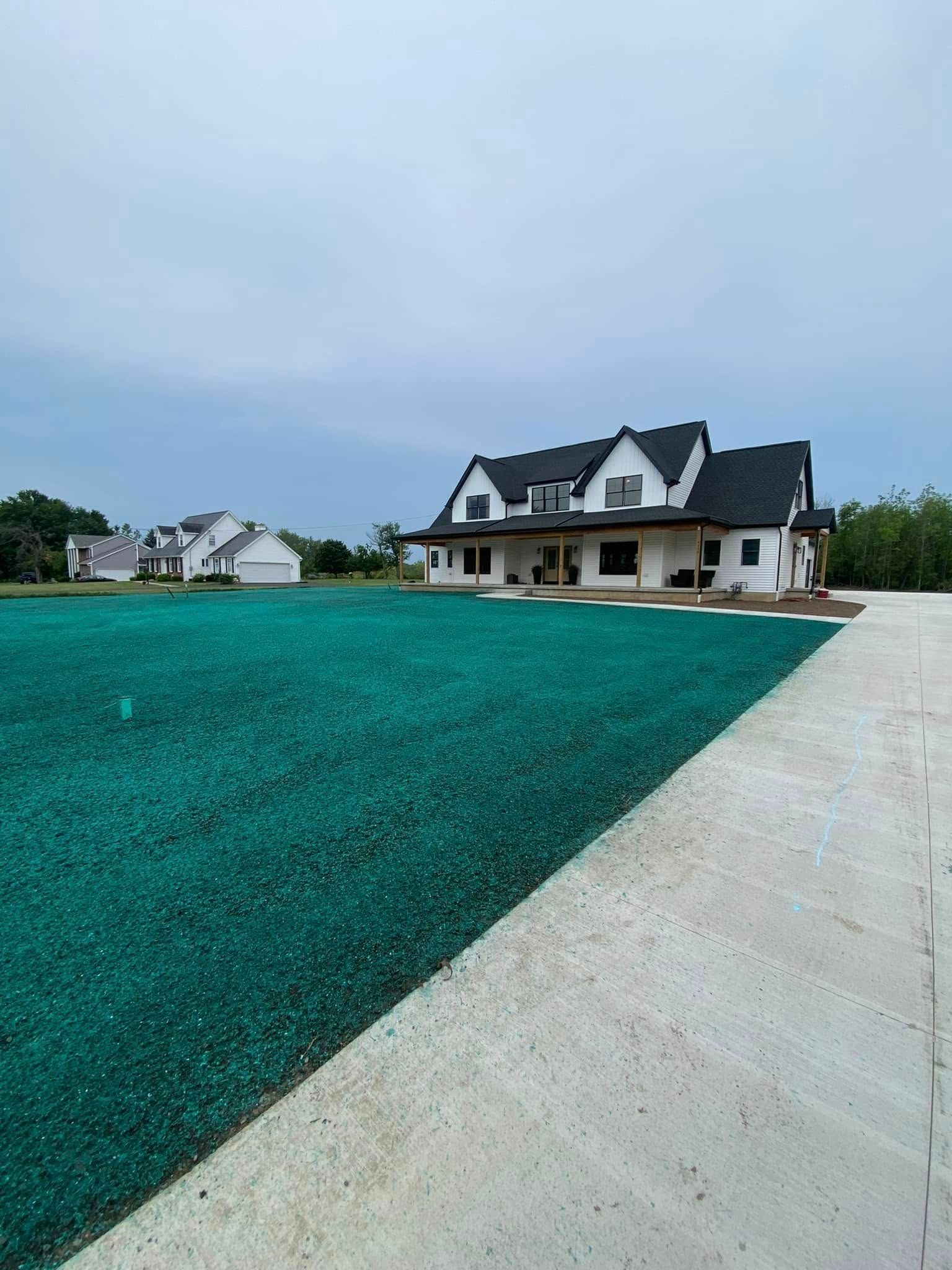
Even Coverage Without the Sod Premium
Hydroseeding in Buffalo for new construction sites and complete lawn replacements where uniform growth matters
Hydroseeding applies a slurry of seed, mulch, fertilizer, and water directly to prepared soil, creating conditions for germination that don't depend on perfectly level ground or seam-free installation. You need this method when starting from bare dirt after building projects, when existing lawn has failed beyond repair, or when sod costs don't fit the budget but you still want faster results than dry seeding provides. The mulch in the mixture holds moisture against the seed and soil surface, which reduces the watering frequency needed during the first two weeks compared to broadcast seeding.
Jensen's Landscaping & Lawn Care uses hydroseeding across Buffalo, New York for residential and commercial properties where establishing a new lawn quickly matters more than having instant green coverage. The process works on slopes where sod would require staking or erosion netting, and the root systems develop directly in your native soil rather than needing to transition from the different soil composition found in sod farms.
Request a lawn installation quote to compare hydroseeding timelines and costs against sod for your specific site conditions.
How Hydroseeding Establishes Root Systems Faster
The mulch layer in hydroseeding slurry acts as insulation and moisture retention, which means seeds germinate in contact with your actual soil rather than sitting on the surface exposed to wind and sun. This direct soil contact encourages roots to grow downward immediately instead of spreading horizontally the way sod roots do before finally penetrating into the ground below the sod layer.
You'll see visible green shoots within seven to fourteen days depending on temperature and watering consistency, with full coverage developing over four to six weeks as grass fills in. The lawn grows uniformly without the seams, edges, or color variations that appear when sod pieces settle unevenly or come from different harvests.
Hydroseeding works best on graded soil that drains properly and has been cleared of construction debris, large stones, or hardpan layers that prevent root penetration. If your site has heavy clay or compaction from equipment traffic, soil amendment or aeration before hydroseeding improves germination rates and long-term lawn health.
Answers to Frequent Service Questions
These questions address common concerns about hydroseeding projects and establishment timelines.
What's included in the hydroseed mixture?
The slurry contains grass seed selected for Buffalo's climate, wood or paper mulch that holds moisture, starter fertilizer to support early growth, and a tackifier that helps the mixture adhere to slopes or uneven terrain.
How soon can you walk on hydroseeded lawn?
You should avoid foot traffic until grass reaches mowing height, usually four to five weeks after application, because walking on germinating seed compacts soil and disrupts shallow root development.
Why does hydroseeding cost less than sod?
Hydroseeding eliminates the labor of harvesting, transporting, and laying individual sod pieces, and you're paying for seed rather than mature grass that's already been grown and maintained at a sod farm.
When is the best time to hydroseed in Buffalo?
Late spring and early fall provide the soil temperatures and moisture conditions that support fast germination, while summer heat requires more intensive watering and winter cold prevents germination entirely.
What happens if germination is uneven?
Thin areas can be reseeded or patched without redoing the entire lawn, unlike sod failure which creates visible dead rectangles that require cutting out and replacing whole sections.
Jensen's Landscaping & Lawn Care evaluates soil conditions and grading before hydroseeding to identify drainage or compaction issues that affect establishment. Arrange a site consultation to review preparation steps and projected timelines for your property.