
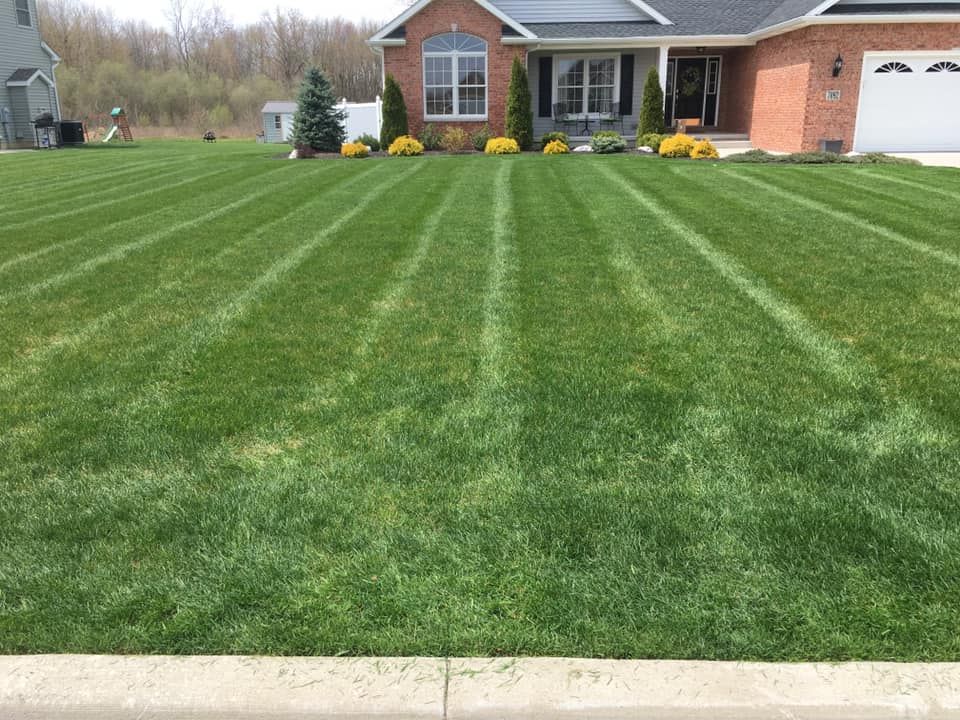
Grass That Outcompetes Opportunistic Growth
Lawn fertilization and weed control in Buffalo for properties where thin turf allows dandelions, crabgrass, and broadleaf weeds to dominate
Buffalo's clay-heavy soils and variable spring temperatures create conditions where cool-season grasses struggle to establish density before warm-season weeds germinate and spread. Jensen's Landscaping & Lawn Care applies scheduled fertilizer and selective herbicide treatments throughout the growing season to promote thick turf that shades soil and prevents weed seeds from getting the light they need to sprout. When your lawn shows more yellow dandelion flowers than green grass blades, or when crabgrass fills in bare spots faster than desirable turf, treatment programs address both the nutrient deficiency that weakens grass and the existing weed population competing for space.
The program targets broadleaf weeds like dandelions, clover, and plantain with selective herbicides that don't harm grass, while pre-emergent treatments stop crabgrass seeds from germinating in late spring. Fertilizer applications provide nitrogen that supports blade growth and root development, creating the density that prevents new weed establishment by eliminating open soil where seeds would otherwise land and grow.
Discuss ongoing treatment plans that align applications with weed germination windows and grass growth cycles specific to Western New York.
What Scheduled Treatments Prevent Long-Term
Fertilization on a planned schedule builds soil nutrient levels that support continuous grass growth rather than the boom-and-bust cycles that occur with single applications. Pre-emergent herbicides applied before soil temperatures trigger crabgrass germination create a chemical barrier in the top layer of soil that stops seedlings as they sprout, which is far more effective than trying to kill established crabgrass later in summer.
Over a full season of treatments, you'll notice fewer dandelions going to seed, reduced crabgrass patches in areas that previously thinned out by mid-summer, and grass that stays green longer into fall rather than yellowing as nutrients deplete. The lawn develops density that crowds out new weed growth, which means each year requires less herbicide as grass fills in the spaces weeds previously occupied.
Treatment timing matters more than product strength—pre-emergents must go down before soil warms to the temperature range where crabgrass germinates, typically when forsythia blooms in Buffalo, while post-emergent broadleaf control works best when weeds are actively growing and moving nutrients through their systems. Programs typically include four to six applications spread from early spring through late fall, with timing adjusted based on weather patterns each year.
Common Questions About This Service
Property owners ask about treatment safety, timing, and what results to expect from fertilization and weed control programs.
What's the difference between pre-emergent and post-emergent herbicides?
Pre-emergent products stop seeds from germinating by disrupting cell division in sprouting seedlings, while post-emergent herbicides kill existing weeds by interfering with growth hormones or photosynthesis in actively growing plants.
How long before you see results from treatments?
Fertilizer greens up grass within seven to ten days as nitrogen reaches roots and supports chlorophyll production, while post-emergent weed control shows wilting and browning within two weeks as herbicides disrupt plant systems.
Why do treatments need to repeat throughout the season?
Single applications provide temporary nutrient boosts that grass uses up within weeks, and pre-emergent barriers break down over time, requiring reapplication to maintain protection as new weed seeds arrive from wind, birds, or adjacent properties.
When should pre-emergent be applied in Buffalo?
Application should happen before soil temperatures reach the mid-50s Fahrenheit for several consecutive days, which typically occurs in mid-to-late April in Western New York, though early warm spells can move that window forward.
What happens between treatment visits?
Grass continues growing using stored nutrients and moisture, while herbicides break down through sunlight and microbial action, which is why programs schedule applications at intervals that maintain protection and nutrient availability without gaps.
Jensen's Landscaping & Lawn Care develops treatment schedules based on your lawn's current condition and weed pressure, with applications timed to Buffalo's climate patterns. Call (716) 696-0041 to begin a program that builds turf density and reduces weed competition over multiple growing seasons.